
Introduction — Why this guide matters (and what “Mobile Number Tracker India” means)
I get asked all the time: “How do I find who called me?” or “Can I check which SIMs are registered under my name?” That’s exactly why I wrote this long-form guide on Mobile Number Tracker India — focused for readers in India and Pakistan who want legal, practical, and trustworthy ways to identify, verify, and protect themselves from phone-based fraud.
Right up front: I’ll use the phrase Mobile Number Tracker India naturally throughout the article (you’ll see it in the title, H1, and early paragraphs). But more important than keywords is safety — I’ll never show you how to invade someone’s privacy or use spyware. Instead, this article teaches how to use official tools, trusted apps, and smart habits to keep you and your family safe.
What is a “Mobile Number Tracker” and what it doesn’t do
A Mobile Number Tracker India (or any tracker) usually provides:
- Caller identity (name or business) when available,
- The telecom operator and registration circle (city/state),
- Spam / scam labels from community-sourced databases,
- Official checks to see how many SIMs are registered under your ID.
What it doesn’t (and shouldn’t) do:
- Reveal someone’s live GPS location without consent,
- Give access to private call logs, messages, or other personal data,
- Legitimise stalking or non-consensual surveillance.
Sharing this distinction is crucial: a tracker for caller ID and SIM verification is legal and helpful. Tracking someone’s live location without permission is illegal and unethical in India, Pakistan, and most other countries.
How Mobile Number Tracker India tools work — simple, human explanation
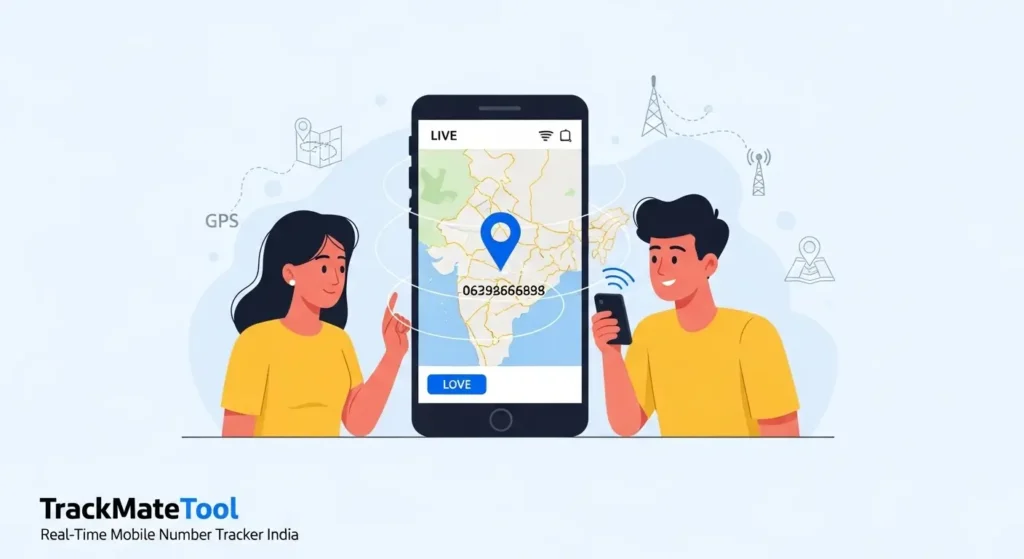
Most popular tools combine several data sources:
- Crowdsourced contact lists — apps (with permission) build massive databases of names tied to numbers (Truecaller is the classic example). Truecaller
- Telecom registration metadata — operator and registration circle information (web lookup tools show this).
- Official government portals — let you verify SIMs registered under your national ID (example: TAFCOP in India and CNIC SIM check in Pakistan). TAFCOP+1
- User reports & spam lists — community reports flag numbers used for fraud or telemarketing.
These ingredients create the fast lookups we use every day — but remember, none of these publicly available systems should replace consent for real-time location sharing.
Why people in India & Pakistan search for “Mobile Number Tracker India”
People use a Mobile Number Tracker India for many practical reasons:
- To identify an unknown caller or message sender.
- To check whether suspicious SIMs are registered in their name.
- To block and report scam numbers quickly.
- To locate a genuinely lost device using official location features.
- To protect elderly family members from phone scams.
If you’re blogging about this topic (or optimising a site), note: show trust signals, cite official portals, and provide step-by-step legal options — Google’s algorithms reward authoritative, helpful content that obeys privacy norms.
Top, trustworthy services you should know (with official links)
Below are the major services I personally trust — they’re widely used and are considered safe when used correctly:
- Truecaller — caller ID, spam detection, and business profiles. Trusted by millions worldwide. Truecaller
- Google Find My Device / Find My — for locating lost Android devices and iPhones respectively. These are the recommended, legal ways to find your own devices. Google+1
- TAFCOP (India) — official government portal to check mobile connections issued in your name (Aadhaar-linked checks). Use it to find unauthorized SIMs. TAFCOP
- CNIC SIM Check (Pakistan) — official SIM information system to check SIMs linked to your CNIC. CNIC SIMS
- National Cyber Crime Reporting Portal (India) — to report scams or suspicious numbers. Cyber Crime Portal
Using and linking to these authoritative resources is not only user-friendly — it also helps signal trust to search engines.
Mobile Number Tracker India — Safe step-by-step lookups (what you can do right now)
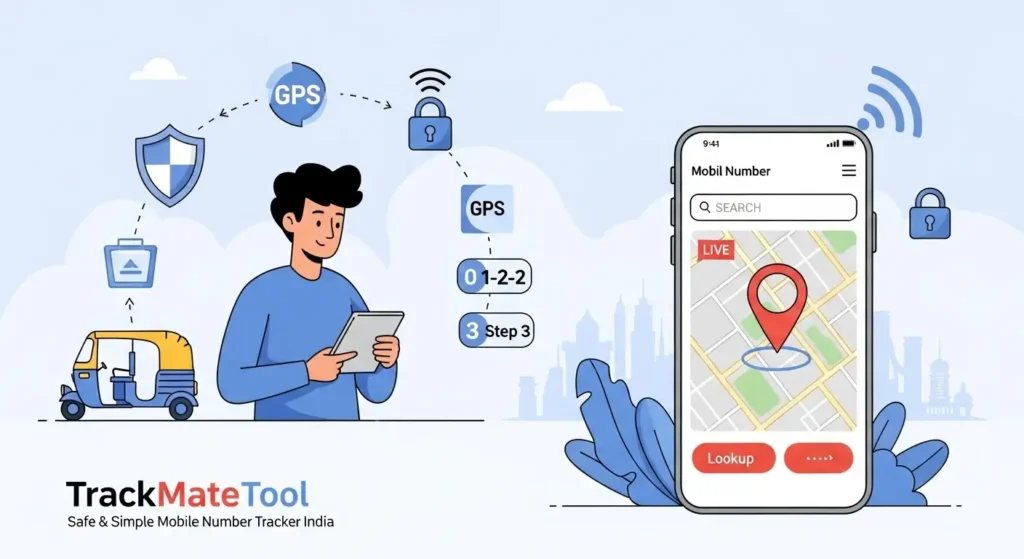
Here’s a legal, everyday checklist I use whenever an unknown number calls or messages me:
- Do a quick reverse lookup (caller ID): Open Truecaller or visit its web ID lookup to see name and spam rating. If it’s labeled spam or reported often, block it. Truecaller
- Check operator & circle info: Use a light web lookup (MobileNumberTracker-style tools) to confirm country, operator, and registered state — often enough to tell if the number is local or international spam.
- Search the number on Google & social media: Many scammers return results with complaints or forum posts. This is a quick reality check.
- If you suspect fraud, report it: Use your country’s cybercrime portal (e.g., India’s National Cyber Crime Reporting Portal). Cyber Crime Portal
- Verify SIMs under your ID: If you worry someone registered SIMs under your identity, check TAFCOP (India) or CNIC SIM check (Pakistan). TAFCOP+1
All these steps are legal, free or low-cost, and protect you against misuse of your identity.
The best apps for caller ID & spam protection (and how they help SEO credibility)
If you recommend apps on your site, include official links and short pros/cons. I recommend:
- Truecaller (caller identification, spam blocking, verified business profiles). Linking to Truecaller’s official download or help pages strengthens trust. Truecaller+1
- Google Find My Device / Find My (built-in device locators). Link to Google’s official Find My Device help pages. Google+1
Why this matters for SEO: linking to authoritative domains (gov, google, large app publishers) helps Google understand your page is well-sourced — just don’t overdo it with low-quality links.
How to check SIMs registered in your name — TAFCOP & CNIC SIM check (practical guide)
One of the most important protections is to know exactly how many SIMs are registered under your national ID.
For India (TAFCOP)
- Visit the TAFCOP portal and follow the “Know Mobile Connections in Your Name” flow. It uses OTP verification and Aadhaar/mobile verification to list active connections. Always use the official TAFCOP link. TAFCOP+1
For Pakistan (CNIC SIM check)
- Use the official CNIC SIM Information System to enter your CNIC and check active SIM counts across operators. This helps catch unauthorized registrations quickly. CNIC SIMS
Make these steps a routine — I check mine periodically and immediately block or report any unexpected connections.
How to find a lost or stolen phone (the right, legal way)
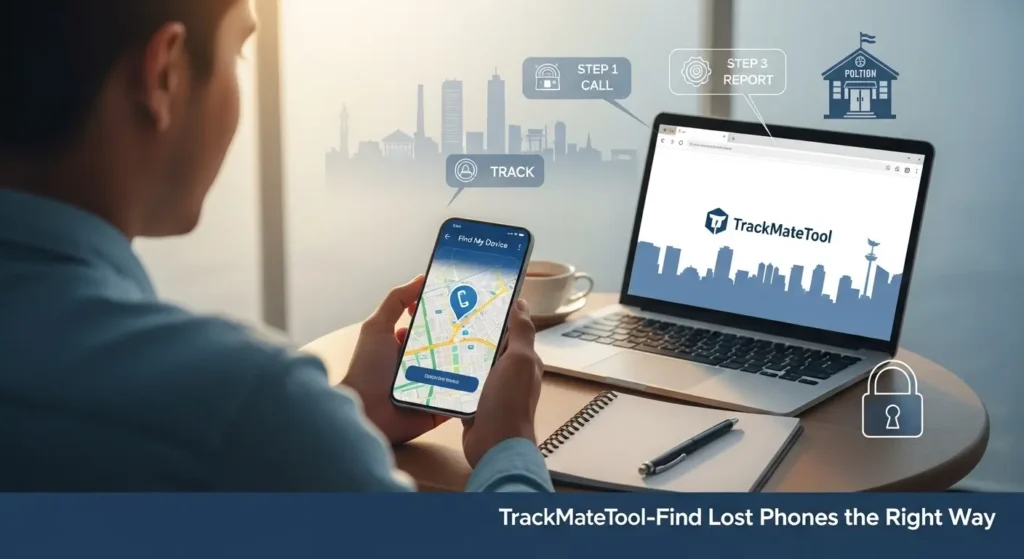
If your phone disappears, here’s the safest playbook:
Android:
- Use Google Find My Device — sign into your Google account at android.com/find to see last known location, ring it, lock it, or erase it. This is the official method for most Android devices. Google+1
iPhone:
- Use Find My iPhone via iCloud — locate, play sound, enable Lost Mode, or erase the device.
Always act quickly, change passwords, and file an FIR if theft is suspected.
Recognizing and avoiding phone scams (real-world tips)
Phone scams are evolving fast. Here’s how I stay one step ahead:
- Never share OTPs or bank details on calls or with unknown SMS links.
- Trust verified caller ID and spam labels — but confirm using Google if something looks odd.
- Report impersonation immediately to the national cyber portal or your bank. Cyber Crime Portal
Real-life note: I once got a fake “bank officer” call asking for OTP. I hung up, called the bank’s official number from its website, and confirmed the bank had not called me. That one call saved me from a fraud attempt.
Example: A step-by-step situation (case study)
Last month, my cousin in Pune got multiple calls from a number pretending to be a bank. He removed the SIM, used Truecaller to confirm the number was flagged by many users, reported it on the national cyber portal, and then checked TAFCOP to ensure no unauthorized SIMs were linked to his Aadhaar. Within a day, his telecom operator blocked suspicious activity. That’s a practical example of Mobile Number Tracker India tools working together: community data (Truecaller), official reporting (cyber portal), and verification (TAFCOP). Truecaller+2Cyber Crime Portal+2
Best privacy and security practices (don’t skip these)
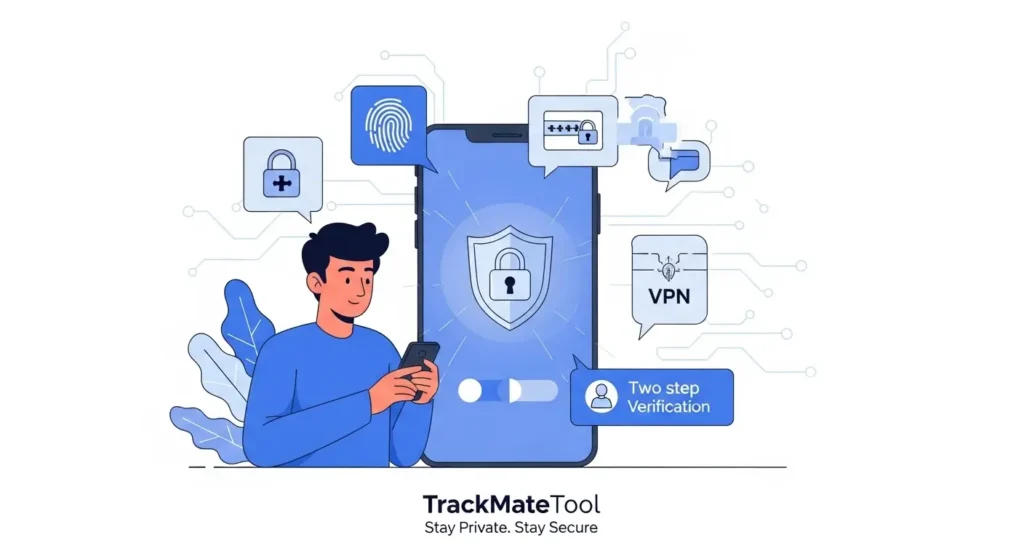
- Use two-factor authentication on Google and Apple IDs.
- Review app permissions — don’t give contact access to apps you don’t trust.
- Regularly check official SIM portals (TAFCOP/CNIC SIM check) for unknown registrations. TAFCOP+1
- Keep your OS and apps updated to prevent vulnerabilities.
- Educate family members (elderly parents are prime scam targets).
FAQs
What is the best Mobile Number Tracker India app?
For caller ID and spam protection, Truecaller is the most widely used and trusted app across India and Pakistan. Use official downloads and privacy settings.
Can I find out who called me for free in India?
Yes — free tools like Truecaller and lightweight web lookups provide name and operator information. For legal SIM verification, use TAFCOP (India) or CNIC SIM check (Pakistan).
How do I check how many SIMs are registered under my Aadhaar?
Visit the TAFCOP portal and follow the verification steps using your mobile number and OTP. This official check helps find unauthorized SIMs.
Can I track someone’s live location using only their phone number?
No. Live GPS location requires the other person’s consent via location-sharing apps. Tracking without consent is illegal and unethical.
What should I do if I receive a scam call?
Don’t share OTPs or bank details. Report the number to your telecom provider and the national cybercrime portal (e.g., cybercrime.gov.in). Block and report the number in your caller-ID app.
Conclusion — Use Mobile Number Tracker India the smart, legal way
If you want to use Mobile Number Tracker India to protect yourself and your family, follow the lawful, practical steps I outlined: rely on trusted apps (Truecaller), official portals (TAFCOP in India, CNIC SIM check in Pakistan), and device-finding tools (Google Find My Device / Find My iPhone). Link to official sources, give your readers clear next steps, and always prioritise consent and privacy.
Do this well and your content will be useful, link-worthy, and Google-friendly — the recipe for long-term SEO success.
Author’s note & action items for your site (quick checklist I use)
- Add this article as a pillar page and create supporting cluster posts.
- Add FAQ schema using the questions above.
- Link to official pages (Truecaller, Google Find My Device, TAFCOP, CNIC SIM check, Cyber Crime Portal). Cyber Crime Portal+4Truecaller+4Google+4
- Create at least 3 internal posts linked from this page (case studies, tutorials, app reviews).
- Promote on social media with an infographic: “3 quick steps to verify a number safely”.
Extra — Useful official links (paste these in your “References” section)
- Truecaller (official): Truecaller — Leading Global Caller ID & Call Blocking App. Truecaller
- Google Find My Device: Find, lock, erase or play a sound on any lost Android device. Google+1
- TAFCOP (India) — Know Mobile Connections in Your Name (official). TAFCOP
- CNIC SIM Information System (Pakistan). CNIC SIMS
- National Cyber Crime Reporting Portal (India) — report cybercrimes and suspicious numbers.
Please don’t forget to leave a review.